Practitioner Resources
Welcome to the National Trading Standards (NTS) Scams Team Practitioner section.
This page has been designed to assist professionals and practitioners who will be interacting with victims of scams, this includes but is not limited to; trading standards, social workers, police, community nurses, volunteers and befrienders.
Start Practitioner e-Learning

Providing support to fraud and scam victims
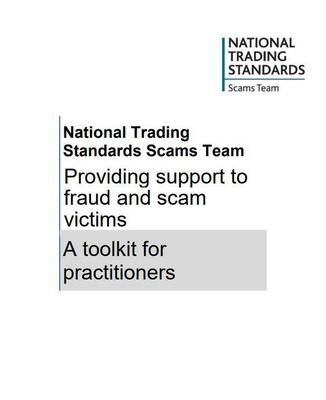
This toolkit will give you the tools to support victims of fraud and scams. The toolkit will:
- Help you understand what a victim of fraud or scam may be going through
- Help you develop techniques to support fraud and scam victims
- Give you examples of what to say and, just as importantly, what not to say to victims
Click here or on the photo to the left for the full report.
Watch our Providing Support to Fraud and Scam victims training package to learn how to effectively and correctly support victims of fraud and scams.
Extra resources
The NTS Scams Team recently commissioned an academic report to consider some of the techniques criminals use with victims of fraud, scams and financial abuse.
Click here to view the report.
Blog post with video
To view the blog post and video created by the National trading standards Scams Team following the report, please click here.
If you have made a payment in response to a scam, contact your bank as soon as possible as they may be able to recover some of your money and will refund you in certain circumstances. You can find more information by clicking here.
Friends Against Scams have been working with The Cyber Helpline to educate people around the threats of cybercrime. This resource is a hub of information on cybercrime and how to stay safe from online scams.
A short video created by the National trading Standards Scams Team following the report published October 2022
Research
New research has found that those lacking financial literacy are twice as likely to have money stolen through fraud.
The NTS Scams Team commissioned Jigsaw Research to test three theories:
1. Those with low financial literacy are more likely to experience fraud.
2. The impact of this fraud can go beyond the financial.
3. Education would be beneficial to help consumers protect themselves.
Click here for the summary of the findings.
To view the full findings of the research, please click here.
To view the blog post created by the National Trading Standards Scams team following the research, please click here.
The NTS Scams Team and others have seen anecdotal evidence that neurodivergent individuals may be more likely to become a victim of fraud.
With this in mind, the NTS Scams Team commissioned research to examine whether:
1. Neurodivergent individuals are more susceptible to fraud and scams.
2. The impact of fraud and scams is different among neurodivergent individuals.
3. Further or modified fraud prevention activities were needed to account for
neurodiversity.
Click here for the summary of the findings.
To view the full findings of the research, please click here.
To view the blog post created by the National Trading Standards Scams team following the research, please click here.
e-Learning content
Understanding The Scale of the Problem
An understanding of the scale of the problem of scams.
Insight into Criminal Behaviour
Insights into the behaviour of the criminals behind scams.
Understanding Legislative Framework
An understanding of the legislation that can be used to support scam victims and to prosecute the criminals behind scams.
Advice on Supporting Victims
Practical advice on how best to support a victim of scams.